

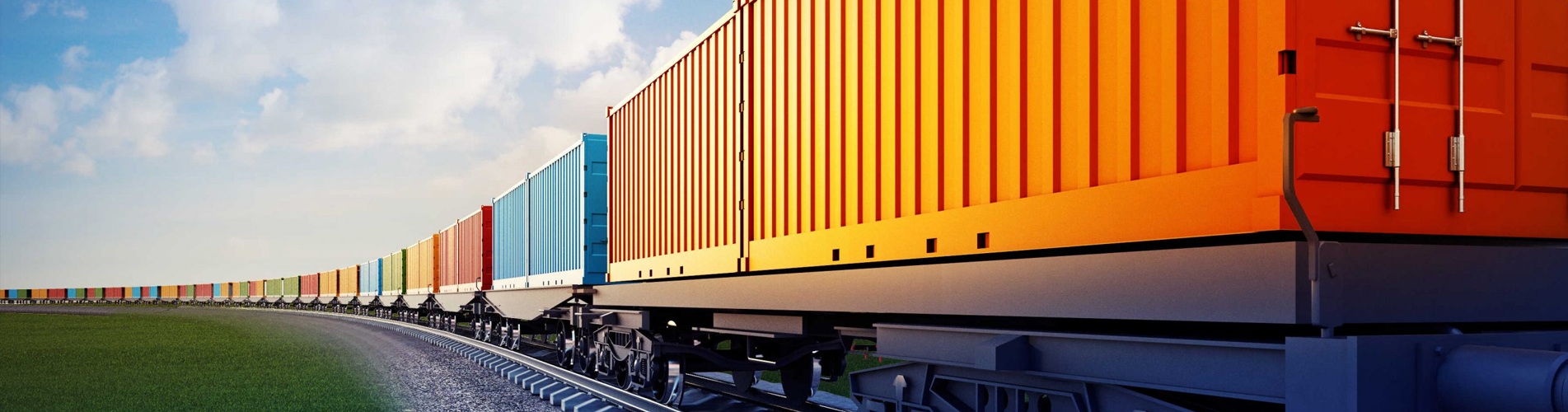
When shipping industrial machinery from China to Europe or Central Asia, the transport mode you choose directly determines your project delivery timeline. Rail has long been the default for oversized equipment, but transloading delays and border inspection uncertainty are pushing more machinery exporters toward TIR trucking. The core difference: TIR seals the cargo once at origin and moves it sealed all the way to destination — no border opening, no inspection. Rail requires transloading at hub terminals and carries the risk of port queuing and random inspections. For time-sensitive heavy machinery, this gap can mean customs time cut by more than 50%.
This article breaks down why TIR achieves that speed advantage, where rail still makes sense, how to compare the real costs, and which scenarios should push a machinery exporter toward TIR.
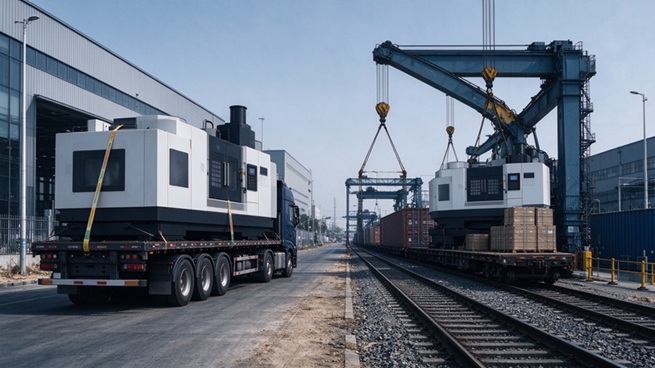
The TIR system works on a "one declaration, one document, one vehicle" principle. A vehicle holding a TIR carnet moves across contracting states without changing trucks or transloading cargo. Customs authorities at each border recognize the sealed vehicle and release it without opening the load. For your machinery, this means: once loaded and sealed at the Chinese factory, the seal is only broken at the destination customs. Every border in between checks documents and seal integrity — but never touches the equipment itself.
Rail operates on a different logic. China-Europe trains require gauge changes at border crossings, and machinery cargo typically involves crane lifting during transloading. That adds both damage risk and waiting time. Major crossings like Manzhouli and Khorgos have been expanding transloading capacity, but peak-season congestion remains volatile. Rail border inspections also tend to be more rigid — once a container is flagged, detention is measured in days, not hours.
TIR truck transport explicitly states that "no container opening is required at the border, saving more than 50% of customs clearance time." This figure comes from the TIR system's trusted-release mechanism for sealed vehicles. For heavy machinery, not opening the box is not just about speed — it means the equipment experiences zero handling-induced impact, rust exposure, or precision loss en route.
Rail is not without advantages. For high-volume, low-value, schedule-flexible bulk cargo, rail's unit cost is genuinely lower, and fixed schedules suit regular replenishment. If your machinery products are standardized small equipment, with large per-batch container volumes and customers who can tolerate a wider delivery window, rail remains the economical choice.
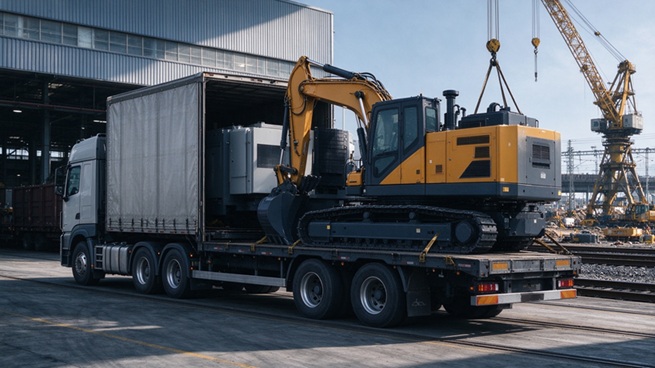
But heavy machinery export rarely fits those premises. A single large CNC machine or construction equipment unit carries high value, significant volume, and strict requirements for shock and moisture protection. Every crane lift during rail transloading is a potential risk point. TIR's door-to-door direct delivery eliminates intermediate handling — the vehicle loads at your factory and drives to the customer's site or warehouse without passing through any hub terminal's gravity-based loading.
Full Truckload (FTL) commits to "no transshipment from origin to destination, reducing cargo damage risk, saving time and cost" — exactly the transport form heavy machinery needs.
Looking only at freight rate per unit, TIR is indeed higher than rail. But from a total project cost perspective, the gap narrows significantly — and can even reverse.
Rail's hidden costs include: warehousing fees from border transloading queues, potential damage repair from crane handling, and customer claims or project penalties from delays. Heavy machinery damage repair is extremely costly — precision recalibration for a single unit can wipe out the entire freight difference. TIR's sealed direct delivery eliminates at least two crane-contact points, and the service description specifically highlights "full GPS tracking + sealed transport, ensuring the safety of high-value and sensitive goods."
Another frequently overlooked cost item is time value. For machinery exporters participating in overseas project bids or milestone-based deliveries, arriving a week early may mean catching the customer's installation window; arriving a week late can trigger a chain of delays across the entire project. TIR from China to major European destinations runs roughly 15 days, and shorter to Central Asia — a clear advantage over rail's 25–30 days. The 3710 Scheduled Delivery Service offers 3/7/10-day time-definite commitments. While primarily aimed at high-urgency cargo, it reflects the company's operational capability in controllable transit times.
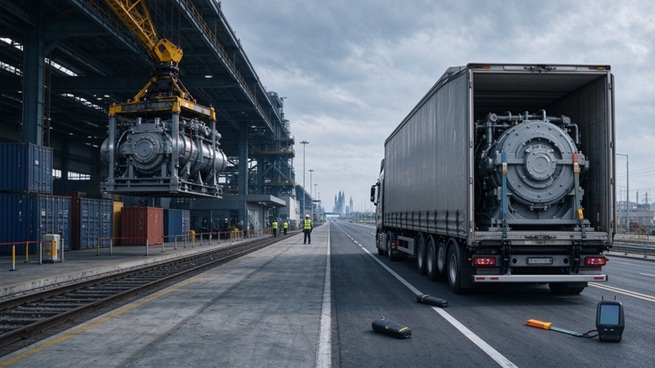
Scenario 1: Single-unit or small-batch high-value equipment. A large machine tool or specialized construction unit — high value, volume insufficient to fill a container, and rail LCL's waiting period plus transloading risk don't justify the savings. TIR full truckload or Less-than-Truckload (LTL) can ship on demand without waiting to consolidate.
Scenario 2: Destination not on a rail hub. Many industrial projects in Central Asia or Europe are located off the rail corridor. Rail delivers to a hub station, then requires road transfer — adding another handling cycle. TIR goes door-to-door, eliminating last-mile relay.
Scenario 3: Delivery tied to project milestones or contractual penalties. When delay costs exceed the freight difference, TIR's time certainty is the most economical insurance.
Scenario 4: Equipment sensitive to vibration and humidity. Sealed cabin + never opened en route avoids the impact of rail crane transloading and the environmental exposure of border inspection openings.
If you are evaluating a heavy machinery shipment, contact the DR Trans team with your equipment dimensions, weight, origin, and destination — we will provide an actual TIR vs. rail cost and transit comparison.
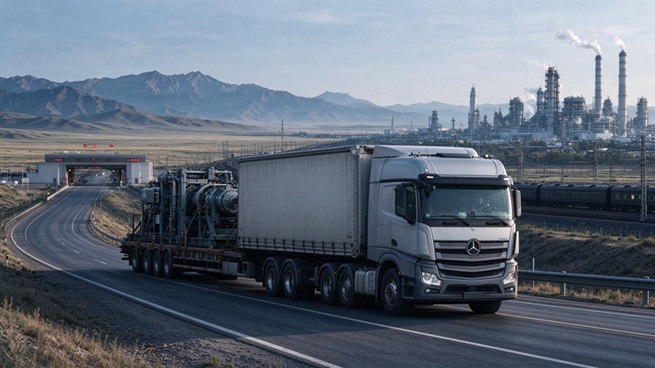
TIR's efficiency across Eurasia is backed by multiple official data points. Shenzhen Customs data shows TIR cargo can clear customs within 2 hours, with Shenzhen-to-Almaty road transport taking about 6 days — half the rail time. Manzhouli port's TIR vehicle throughput in the first half of 2026 more than tripled year-on-year, with customs ensuring rapid release of sealed vehicles through a closed-loop mechanism of "origin inspection — en-route monitoring — port release." These figures from Chinese customs and local governments confirm that TIR's overland time advantage is systemic, not anecdotal.
For heavy machinery specifically, TIR's value is not "being the fastest" — it is maximizing certainty within an acceptable cost range. Rail's scale economics remain irreplaceable for bulk and low-value categories, but the value structure of machinery exports means the premium paid for certainty is usually worth it.

 IPv6 دعم الشبكة