



TIR cold chain transport, temperature-controlled shipping for chocolate, and dairy products transportation all require careful planning to protect product quality during international freight. For food importers shipping from China to Russia and Europe, temperature fluctuations, condensation, unsuitable packaging, and delays can turn an otherwise successful delivery into a costly problem.
Chocolate can lose its appearance and texture when exposed to unsuitable temperatures. Fresh dairy products may require continuous refrigeration to maintain their quality and safety. These risks make the choice of transport equipment, temperature monitoring, and route planning especially important.
For businesses moving temperature-sensitive food across borders, TIR road transport can be part of an efficient logistics solution when combined with suitable refrigerated equipment and documented temperature-control procedures.
DR Trans provides temperature-controlled logistics solutions for international cargo. In this guide, we explain how to manage the main temperature risks for chocolate and dairy products, what to check before dispatch, and how to select an appropriate cold chain transport plan.
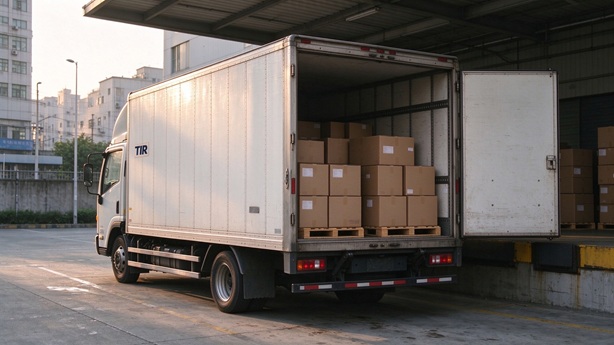
International food transportation involves more than moving products from one warehouse to another. Cargo may pass through different climates, border crossings, loading facilities, and distribution centers before reaching its destination.
During this journey, several problems can affect temperature-sensitive products:
Temperature fluctuations: Repeated exposure to unsuitable temperatures can affect product quality and shelf life.
Incorrect vehicle settings: A refrigeration unit must be configured for the requirements of the specific product, rather than a general assumption about chilled cargo.
Poor loading practices: Blocked air circulation can create uneven temperatures inside a refrigerated trailer.
Condensation and moisture: Changes in temperature can cause moisture to form on packaging or products under certain conditions.
Unexpected delays: Border procedures, congestion, and unloading delays can extend the time cargo spends in transit.
According to the US Food and Drug Administration's guidance on the sanitary transportation of food, important considerations include temperature control, vehicle cleanliness, suitable packaging, and proper loading and unloading practices.
Although the specific legal requirements vary by destination and product, these principles provide a useful foundation for planning international food freight.
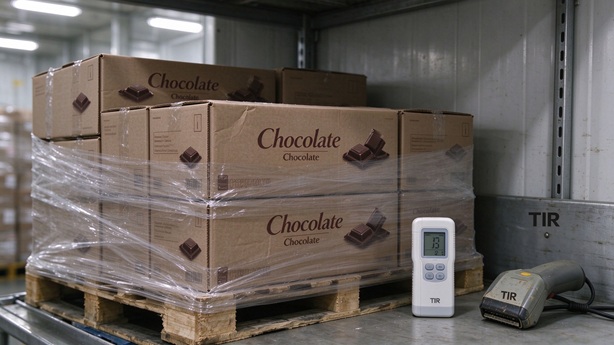
Chocolate is sensitive to its transportation environment. Excessive heat can soften or melt it, while temperature fluctuations and moisture can affect its surface appearance and texture.
For importers and distributors, the consequences may include damaged packaging, reduced shelf appeal, customer complaints, and potential commercial losses.
There is no single temperature that is suitable for every chocolate product.
Dark chocolate, milk chocolate, white chocolate, filled chocolates, and products containing other temperature-sensitive ingredients can have different storage and transportation requirements. The appropriate conditions depend on the manufacturer's specifications, product formulation, packaging, and expected transit conditions.
Before shipping, importers should confirm:
The manufacturer's recommended transport temperature range.
The maximum permitted temperature and acceptable duration of any excursion.
Whether the product requires refrigerated or controlled-ambient transport.
Whether the packaging can withstand expected humidity and temperature changes.
Whether the cargo needs additional protection during loading and unloading.
A refrigerated truck is not automatically the best choice for every chocolate shipment. Some products may require a stable, cool environment rather than very low temperatures. Excessive cooling followed by exposure to warm, humid air can also contribute to condensation and surface defects.
The objective is to maintain the product's specified conditions throughout the journey, not simply to make the cargo compartment as cold as possible.
A well-planned chocolate shipment starts before the truck arrives.
First, confirm that the product is properly packed and that the packaging is suitable for the expected journey. Second, precondition the vehicle to the agreed setpoint before loading, where required. Third, distribute pallets to allow appropriate airflow around the cargo.
Finally, establish a monitoring and escalation procedure. If the temperature moves outside the agreed range, the logistics team should know who will investigate the issue, how the excursion will be documented, and who will decide whether the shipment remains suitable for distribution.
For businesses transporting confectionery over long distances, these measures can be as important as selecting the transport route itself.
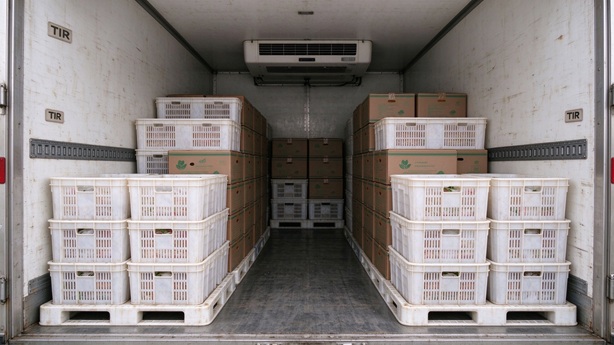
Dairy products require particularly careful planning because their storage conditions vary considerably.
Fresh milk, yogurt, cream, soft cheese, hard cheese, butter, milk powder, and shelf-stable dairy products should not automatically be assigned the same transportation temperature.
For some chilled dairy products, uninterrupted refrigeration is essential. Other products may have different requirements depending on their processing, packaging, and labeling.
These products may require refrigerated transportation throughout the supply chain.
Before dispatch, the shipper and carrier should agree on the required temperature range and confirm that the refrigerated vehicle can maintain it under the expected ambient conditions.
Key checks include:
Pre-cooling the cargo compartment when necessary.
Confirming that the refrigeration unit is functioning correctly.
Checking that the vehicle is clean and suitable for food transport.
Loading cargo without obstructing air circulation.
Monitoring and documenting temperature according to the agreed procedure.
Planning delivery and unloading to avoid unnecessary exposure to ambient conditions.
The refrigeration unit's displayed temperature does not necessarily represent the temperature of every product inside the trailer. Loading patterns, airflow, door openings, and the initial temperature of the goods can all affect the result.
Cheese and butter can have different temperature requirements depending on their type, processing, and packaging. Some products require refrigeration, while others may be transported under different specified conditions.
Milk powder and certain shelf-stable dairy products may not require refrigerated transport, but they can still be vulnerable to moisture, unsuitable storage conditions, and packaging damage.
The correct approach is to classify each product before booking transport and obtain the applicable handling instructions from the manufacturer or food safety specialist.
Important: Never use a generic temperature range as a substitute for the product's approved storage and transportation specifications.
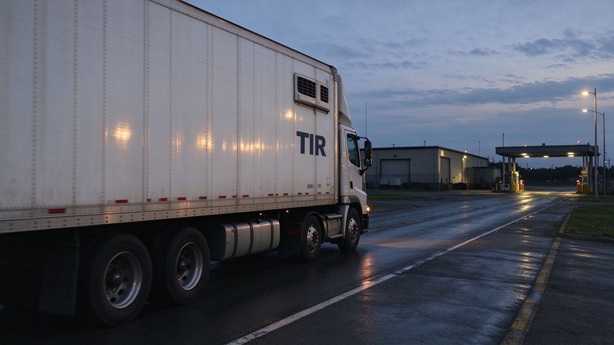
TIR is an international customs transit system designed to facilitate the movement of goods across borders under customs controls. It is not, by itself, a refrigeration system or a guarantee of temperature compliance.
For temperature-sensitive food, the transport arrangement must combine suitable customs procedures with the correct vehicle, cargo handling, monitoring, and route planning.
The selected vehicle must be capable of maintaining the product's required conditions throughout the planned journey.
Depending on the cargo, this may mean a refrigerated trailer, a temperature-controlled vehicle, or another suitable transport solution. Equipment availability and suitability must be confirmed before the shipment is booked.
Where a suitable direct road transport plan is available, reducing intermediate handling can help limit exposure to ambient temperatures and reduce opportunities for packaging damage.
However, direct transport does not eliminate every risk. Border inspections, planned stops, equipment failures, and unloading operations still require appropriate controls.
Temperature monitoring helps shippers and carriers understand the conditions experienced by the cargo during transit.
Depending on the shipment, the agreed plan may include data loggers, temperature records, alarms, or periodic reporting. The parties should clarify how records will be provided and what action will be taken if a deviation occurs.
International road freight can be affected by congestion, border processing, weather, and changes in delivery schedules.
For perishable food, route planning should consider not only the expected transit time but also the availability of suitable equipment, contingency arrangements, and the product's remaining shelf life at delivery.
Explore DR Trans temperature-controlled logistics solutions to learn more about the role of temperature management in international freight.
Not every food shipment needs the same transport arrangement. The choice depends on the product's temperature requirements, volume, route, shelf life, and budget.
| Consideration | Standard Freight | Temperature-Controlled Freight |
|---|---|---|
| Temperature management | Generally relies on ambient conditions unless otherwise arranged | Uses equipment and procedures designed for the agreed temperature range |
| Chocolate shipments | May be suitable for products approved for ambient transport under expected conditions | Helps protect products requiring a controlled environment |
| Chilled dairy products | Usually unsuitable when continuous refrigeration is required | Can maintain specified refrigerated conditions with appropriate equipment |
| Monitoring | Depends on the service arrangement | Can include agreed temperature recording and reporting |
| Operational planning | Standard cargo handling and route planning | Requires additional equipment, loading, monitoring, and contingency checks |
The best choice is not necessarily the coldest or most expensive option. It is the transport arrangement that matches the product's actual requirements and manages the risks along the entire route.
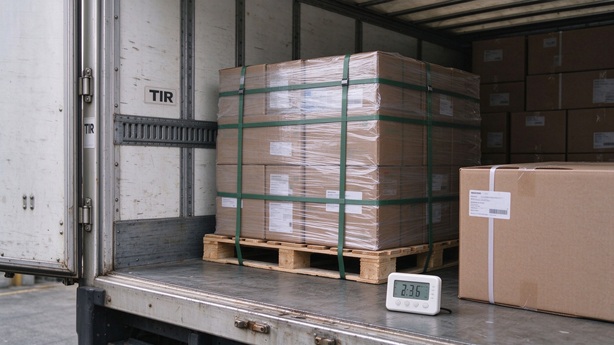
Before confirming an international food shipment, importers should review the following points with their logistics provider.
Product requirements
Confirm the product's specified temperature range and any permitted excursions.
Check the remaining shelf life and expected delivery date.
Identify any requirements for humidity, ventilation, or protection from light.
Packaging and loading
Confirm that packaging is suitable for international transport.
Ensure pallets and cargo are secured properly.
Keep airflow paths clear when using refrigerated equipment.
Verify that the vehicle is clean and suitable for the intended food cargo.
Equipment and monitoring
Confirm vehicle availability and refrigeration capability.
Agree on pre-cooling requirements and the temperature setpoint.
Define the monitoring method and access to temperature records.
Establish a process for responding to equipment failure or temperature excursions.
Documents and delivery
Prepare commercial invoices, packing lists, and applicable customs documentation.
Confirm product-specific import, labeling, and food safety requirements for the destination.
Check delivery arrangements, unloading availability, and contingency plans.
Clarify responsibility for cargo inspection and decisions following a temperature excursion.
For food safety requirements in the United States, consult the FDA's Sanitary Transportation of Human and Animal Food rule. For shipments to Russia, Europe, or other markets, the relevant destination-country rules and product-specific requirements must also be checked.
Choosing an international freight solution for temperature-sensitive food requires more than comparing transit times. Importers need to understand whether the proposed vehicle, handling arrangements, route, and monitoring procedures are suitable for the cargo.
DR Trans offers international logistics solutions covering road freight, rail freight, and temperature-controlled transportation. Depending on the route and cargo requirements, our team can help assess the available transport options for shipments between China, Russia, Europe, and other served destinations.
For chocolate and dairy shipments, the planning process should begin with a clear description of the goods and their handling requirements.
When requesting a quotation, provide:
Product type and packaging.
Total cargo weight and volume.
Pickup city and destination.
Required temperature range.
Preferred dispatch date and delivery window.
Any special handling, documentation, or monitoring requirements.
These details help determine which transport arrangement is appropriate and whether specialized temperature-controlled equipment is needed.
Visit the DR Trans Cold Chain service page to explore our temperature-controlled logistics services, or visit the DR Trans homepage to learn more about our international freight solutions.
Planning a chocolate or dairy shipment from China to Russia or Europe? Contact DR Trans with your cargo details and required temperature range to discuss a suitable transportation plan.
TIR cold chain transport combines international road freight using the TIR customs transit system, where applicable, with suitable temperature-controlled equipment and handling procedures. TIR facilitates customs transit; refrigeration and temperature monitoring must be arranged separately.
There is no universal temperature for all chocolate products. The correct range depends on the product formulation, manufacturer's instructions, packaging, and expected transport conditions. Importers should confirm the approved range before dispatch.
No. Fresh milk, yogurt, cream, and many other chilled dairy products require refrigeration under their specified conditions. Some processed or shelf-stable dairy products may have different requirements. The product label and manufacturer's instructions should determine the transport plan.
Depending on the shipment, temperature can be monitored using data loggers, sensors, or other agreed recording methods. Importers should establish how readings will be reviewed, how deviations will be reported, and how records will be made available.
TIR road transport may be suitable when the route, customs arrangements, vehicle, and handling plan meet the shipment's requirements. The availability of appropriate refrigerated or temperature-controlled equipment must be confirmed for each shipment.
Provide the product type, packaging, cargo volume and weight, origin, destination, required temperature range, shipping date, and any special handling or documentation requirements. This information helps the logistics provider assess the appropriate transport options.

 IPv6 دعم الشبكة