


China is an important trading partner for Russia, supplying a wide range of commercial products, including industrial equipment, automotive components, furniture, construction materials, textiles, and electronics. For Russian importers, choosing an appropriate transportation method is essential for managing logistics expenses, maintaining supply chain efficiency, and ensuring reliable delivery.
Road freight is one of the transportation options available for shipments between China and Russia. Depending on the cargo volume, delivery requirements, and route conditions, businesses can consider full truckload transportation, TIR truck services, railway freight, or multimodal solutions.
The cost of shipping from China to Russia depends on several factors, including the distance between the loading and delivery locations, cargo weight and volume, vehicle requirements, border procedures, and the scope of logistics services. Since each shipment has different requirements, transportation rates are generally calculated individually.
Dear-Railway Transport provides international freight transportation services connecting China with Russia and other markets across Eurasia. Its service portfolio includes international truck transportation, China–Russia TIR transport, railway freight, and multimodal logistics. The most suitable solution depends on the shipment specifications and transportation conditions.
Understanding the main cost factors helps importers prepare more accurate shipping requests, compare freight quotations, and make informed logistics decisions.

The origin and destination are among the most important factors in determining international trucking costs. China has a large geographical area, with manufacturing centers and logistics hubs located across different regions. Consequently, shipments departing from different Chinese cities may require different routes and transportation arrangements.
The destination in Russia also affects the overall cost. Deliveries to major logistics centers and shipments to more remote industrial locations can involve different distances, road conditions, and delivery requirements.
Border crossing arrangements and current operating conditions may further influence the transportation rate and estimated transit time. Providing the exact loading and delivery cities helps the logistics provider evaluate the route and prepare a more relevant quotation.
For door-to-door transportation, the supplier's pickup address and the consignee's final delivery address should also be specified.
Cargo characteristics directly influence vehicle selection and loading arrangements. The total gross weight, volume, package count, and dimensions determine how the goods can be accommodated within the available vehicle capacity.
Standard packaged goods may be transported using conventional truck configurations, while heavy, oversized, or irregularly shaped cargo may require additional assessment.
Importers should prepare accurate information about the shipment before requesting a freight quotation. This normally includes the total gross weight, volume in cubic meters, number of packages, and dimensions of individual handling units.
Correct cargo measurements help reduce the risk of loading problems, vehicle changes, and unexpected adjustments to the original quotation.
Different products require different transportation arrangements. Industrial machinery, automotive parts, furniture, textiles, and general merchandise may have different packaging, loading, and handling requirements.
Certain goods may also be subject to additional transportation restrictions or documentation requirements. Dangerous goods, temperature-sensitive products, and oversized cargo should be reviewed before the shipment is confirmed.
Providing an accurate product description enables the logistics provider to assess vehicle suitability, documentation requirements, and any special arrangements needed for transportation.
Full truckload transportation is generally suitable for shipments that require a dedicated vehicle or occupy a substantial proportion of the available loading capacity.
A direct truck service may allow cargo to remain on the same loaded vehicle throughout the agreed road transportation route, avoiding intermediate transfers to another truck. This arrangement can reduce cargo handling operations and simplify coordination during transportation.
However, direct trucking is not necessarily the least expensive option for every shipment. The final cost depends on the route, cargo specifications, available vehicles, and the overall service arrangement.
For smaller consignments, less-than-truckload transportation or other freight solutions may provide a more appropriate balance between cost and delivery requirements. Comparing the full transportation cost, handling arrangements, and transit expectations helps businesses identify the most suitable option.
The transportation rate is only one component of the total logistics cost. Depending on the shipment and the agreed service scope, additional expenses may arise during cargo preparation, border processing, and final delivery.
These expenses may include cargo pickup from the supplier, loading and unloading, transport documentation, customs brokerage, warehousing, cargo insurance, and delivery to the consignee's premises.
Customs duties and import taxes are separate considerations. Their amounts depend on the product classification, customs value, applicable regulations, and other relevant factors. They should not automatically be treated as included in the international trucking rate.
Before confirming a shipment, importers should review the quotation carefully and clarify which services are included, which expenses are charged separately, and which party is responsible for customs-related arrangements.
A transparent quotation provides a clearer picture of the total logistics budget and makes it easier to compare different transportation providers.
Direct truck transportation can be a practical solution for businesses that need to move commercial cargo between China and Russia while minimizing intermediate handling operations.
When the agreed route allows the goods to remain on the same loaded truck, there is no need to transfer the cargo to another truck at an intermediate point. This can reduce handling-related risks, particularly for goods that require careful loading, securing, or packaging.
Road freight also offers flexibility in coordinating pickup locations, delivery addresses, and shipment schedules. This can be useful for companies importing industrial components, furniture, construction materials, and other commercial products.
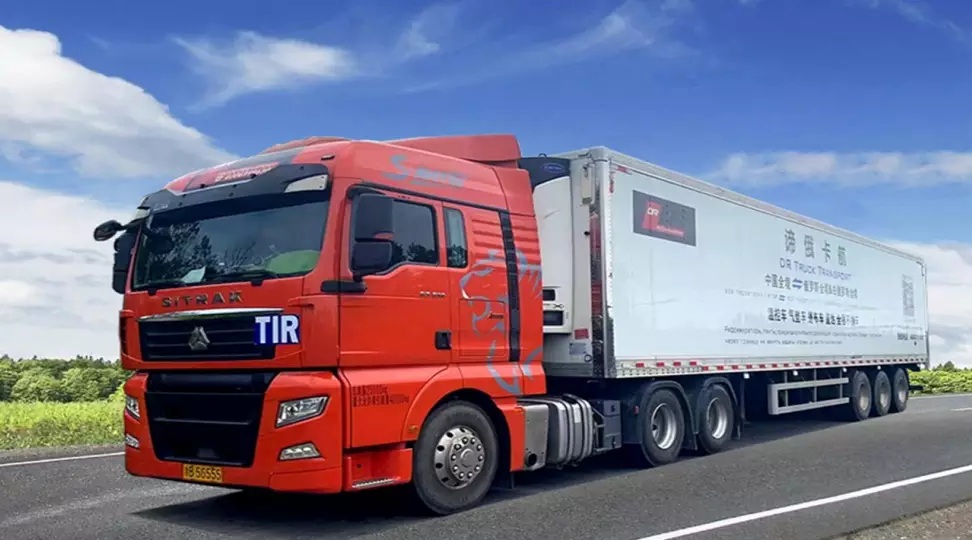
The appropriate vehicle depends on the cargo specifications and the requirements of the route. Dear-Railway Transport describes several vehicle configurations on its website, including flatbed, refrigerated, container, and curtain-sided trucks. The availability and suitability of a particular vehicle should be confirmed for each shipment.
Direct transportation does not eliminate border procedures or guarantee a fixed delivery time. Actual transit conditions depend on the route, documentation, border processing, and other operational factors.
An accurate freight quotation starts with a clear understanding of the shipment and its delivery requirements. The process generally begins with identifying the loading location in China and the final destination in Russia.
The next step is to establish the cargo specifications, including the product description, gross weight, total volume, package count, and dimensions. Additional technical information may be necessary for oversized cargo or products with special handling requirements.
The logistics provider can then evaluate the available transportation options and determine whether a dedicated truck, direct road transportation, or an alternative freight arrangement is appropriate.
The scope of services should also be agreed upon before the quotation is finalized. This includes clarifying whether the shipment requires supplier pickup, loading and unloading, customs coordination, warehousing, insurance, or delivery to the final destination.
The resulting commercial proposal should specify the transportation rate, included services, separately chargeable expenses, estimated transit time, and applicable payment terms.
Providing complete and accurate shipment information helps reduce unnecessary clarification and supports a more reliable freight cost calculation.
Preparing the shipment details in advance makes the quotation process more efficient. The most useful information includes the origin and destination, product description, total gross weight, volume, number of packages, cargo dimensions, and expected readiness date.
The supplier's pickup address and the consignee's delivery address should be included when door-to-door service is required. Importers should also disclose any special handling requirements or restrictions that could affect vehicle selection.
If the goods are not yet ready for dispatch, preliminary cargo measurements and an estimated shipping date can be used for an initial assessment. The quotation may need to be updated once the final shipment specifications are available.
Complete information enables the logistics provider to evaluate transportation capacity, routing options, and the overall cost more effectively.
The transit time for international road freight varies according to the origin, destination, transportation route, and border conditions. Vehicle availability, cargo readiness, documentation, and final delivery arrangements can also influence the overall schedule.
It is important to distinguish driving time from the complete delivery period. The latter may include waiting for cargo readiness, vehicle dispatch, loading, border procedures, and transportation to the final destination.
For this reason, transit estimates should be based on the actual route and current operating conditions rather than a general timeframe for the entire China–Russia corridor.
When evaluating transportation proposals, businesses should consider both the estimated delivery period and the conditions under which that estimate was prepared.
Effective freight cost management begins with advance planning and accurate shipment information. Coordinating the dispatch date with the supplier can help align cargo readiness with vehicle availability and reduce avoidable waiting time.
Accurate cargo measurements are equally important. Correct weight, volume, and dimensions help ensure that the selected vehicle meets the shipment's requirements and reduce the possibility of additional charges caused by inaccurate declarations.
Importers should also compare the complete cost of transportation rather than focusing exclusively on the initial freight rate. Pickup, handling, customs-related services, storage, insurance, and final delivery can all affect the total logistics budget.
Preparing the necessary commercial and transport documents before dispatch can help reduce the risk of delays caused by incomplete or inconsistent information.
Finally, the transportation method should match the shipment requirements. Full truckload, less-than-truckload, railway freight, and multimodal transportation each serve different needs. Evaluating cargo volume, destination, delivery expectations, and total cost helps businesses select an appropriate logistics solution.
International road freight is used for a wide range of commercial goods, subject to vehicle capacity and applicable transportation regulations.
Typical cargo categories include industrial machinery and equipment, automotive components, furniture, household products, construction materials, textiles, clothing, and general merchandise.
The suitability of a particular shipment depends on its weight, dimensions, packaging, handling requirements, and any applicable restrictions. Dangerous goods, oversized cargo, and products requiring special transportation conditions should be assessed before the booking is confirmed.
Accurate product information helps the logistics provider determine whether the proposed transportation service is suitable for the shipment.
Selecting a freight forwarder involves evaluating more than the quoted transportation rate. Route experience, service transparency, documentation support, communication, and the ability to coordinate the required transportation arrangement are also important considerations.
Importers should ensure that the quotation clearly identifies the services included and any expenses that may be charged separately. Responsibilities for transport documentation, customs coordination, and final delivery should be agreed upon before dispatch.
Transit estimates should reflect the specific route and relevant operating conditions. Businesses should also establish how shipment updates will be communicated and how changes to the transportation schedule will be handled.
Dear-Railway Transport lists international truck transportation, China–Russia TIR transport, railway freight, and multimodal logistics among its services. The appropriate arrangement should be confirmed according to the cargo requirements, destination, and current transportation conditions.
Dear-Railway Transport provides international freight transportation services connecting China with Russia and other destinations across Eurasia. Its service portfolio includes road freight, TIR truck transportation, railway transportation, and multimodal logistics.
For shipments between China and Russia, the transportation solution can be evaluated according to the cargo type, shipment volume, origin, destination, and delivery requirements. Where appropriate and available, businesses can discuss direct truck transportation arrangements designed to minimize intermediate cargo transfers.
The quotation process takes into account the shipment's loading location, final destination, weight, volume, cargo description, shipping schedule, and required additional services.
To facilitate the assessment, importers should provide accurate shipment information and identify any special transportation requirements. This allows the logistics team to review the available options and prepare a proposal based on the specific shipment.
Dear-Railway Transport can help businesses evaluate international freight options for shipments moving from China to Russia.
Contact the team to discuss your cargo requirements, review suitable transportation arrangements, and request an individual freight quotation.
Contact information
Transportation rates, vehicle availability, transit estimates, and service inclusions are confirmed individually according to the shipment details and current operating conditions.
The cost of shipping from China to Russia by truck depends on the transportation route, cargo weight and volume, vehicle requirements, border procedures, and the scope of additional logistics services.
Direct truck transportation can be suitable for businesses that value reduced intermediate cargo handling and coordinated road freight arrangements. However, the most appropriate solution depends on the shipment size, delivery requirements, transportation capacity, and overall logistics cost.
Preparing accurate cargo information and reviewing the complete quotation helps importers plan shipments more effectively and avoid unexpected expenses.
Dear-Railway Transport offers road, TIR, railway, and multimodal freight transportation solutions for international shipments. Businesses can submit their cargo details to discuss available options and obtain a quotation tailored to their transportation requirements.

 IPv6 دعم الشبكة