


Shipping from China to Central Asia has become an important part of international trade for importers and distributors across the region. Businesses looking for reliable China to Central Asia freight services, shipping from China to Kazakhstan, or China to Uzbekistan cargo transportation need to consider more than just the quoted freight rate. The right shipping route can affect delivery time, customs procedures, transportation costs, and the overall reliability of the supply chain.
Central Asia includes Kazakhstan, Uzbekistan, Kyrgyzstan, Tajikistan, and Turkmenistan. Although these countries are geographically close, their transport connections and border conditions are different. A route that works well for delivering goods to Almaty may not be the most practical option for shipments to Tashkent or Dushanbe.
So, how should importers choose the best freight route from China to Central Asia? Let's look at the main transportation corridors, their advantages, and the factors that matter when planning your shipment.
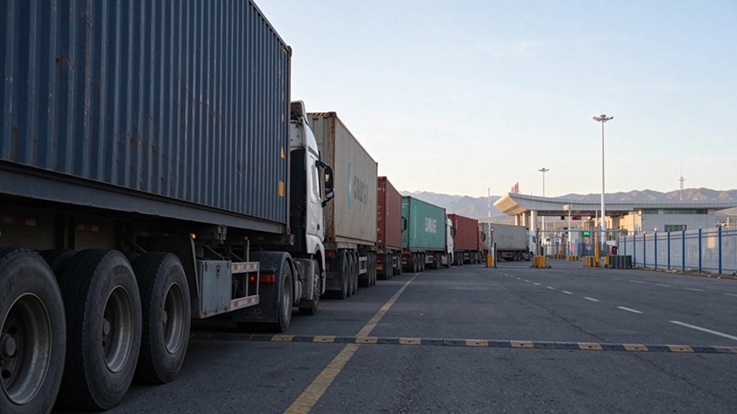
Most cargo shipments from China to Central Asia rely on road and railway networks connecting Xinjiang with neighboring countries. The main border crossings include Khorgos, Alashankou, and their corresponding railway connections in Kazakhstan.
Choosing the right crossing depends on the destination, cargo type, departure city, and available transport capacity.
Khorgos is one of the most important land gateways connecting China with Kazakhstan and the wider Central Asian market.
A typical transportation route may look like this:
China → Urumqi → Khorgos → Almaty → Shymkent → Tashkent
This corridor is particularly relevant for shipments destined for Kazakhstan and Uzbekistan. After entering Kazakhstan, cargo can continue by truck or rail to major commercial centers and other regional destinations.
Advantages:
Provides access to major logistics hubs in Kazakhstan.
Connects China with Uzbekistan and other Central Asian markets.
Supports both road and railway transportation.
Offers flexible options for different shipment volumes.
For businesses shipping regularly to Almaty, Astana, or Tashkent, this corridor is worth considering when comparing freight costs and delivery arrangements.
Another important option is the railway corridor through Alashankou on the Chinese side and Dostyk on the Kazakh side.
The route generally follows:
China → Alashankou → Dostyk → Kazakhstan → Final Destination
This crossing is a major connection between the Chinese and Kazakh railway networks. It is suitable for containerized cargo, industrial materials, and larger shipments that benefit from railway transportation.
One important factor is the difference in railway track gauges. China uses the standard 1,435 mm gauge, while Kazakhstan uses the 1,520 mm gauge. Therefore, railway cargo may require transloading or other gauge-change operations at the border.
Importers should account for these procedures when estimating the total delivery time.
For shipments destined for southern Kyrgyzstan or Uzbekistan's Fergana Valley, routes through the Irkeshtam or Torugart border crossings may also be considered.
A typical road route is:
Kashgar → Irkeshtam → Osh → Andijan
This option can be practical for cargo destined for Osh, Andijan, and nearby areas.
However, the suitability of this route depends on road conditions, border arrangements, vehicle availability, and the final delivery location.
Importers should also check whether the route is appropriate for their cargo dimensions and customs requirements before arranging transportation.
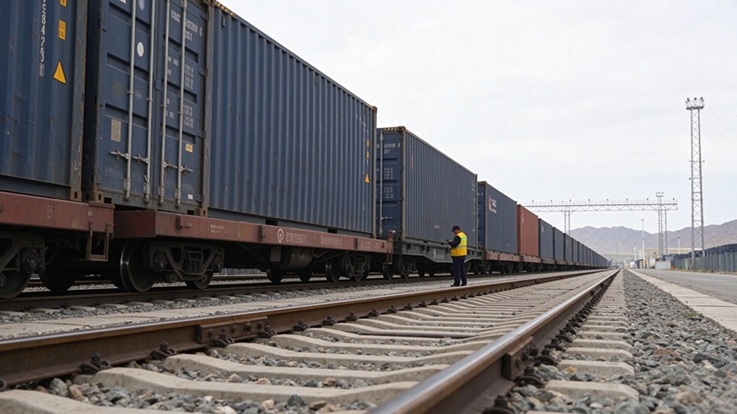
When arranging freight from China to Central Asia, road and railway transportation are two major options.
Neither is automatically the best choice. The right solution depends on shipment size, delivery urgency, destination, and total logistics costs.
Road transportation is often a practical option for businesses that need flexible delivery arrangements.
Compared with railway transportation, trucking can provide more flexibility in departure scheduling, cargo handling, and final-mile delivery.
It is particularly suitable for:
Shipments requiring flexible delivery schedules.
Full truckload (FTL) cargo.
Less-than-truckload (LTL) shipments.
Cargo requiring door-to-door transportation.
Shipments to destinations with limited direct railway access.
For importers who want to reduce unnecessary cargo transfers, direct trucking can also help minimize additional handling procedures.
Learn more about road transport services from China.
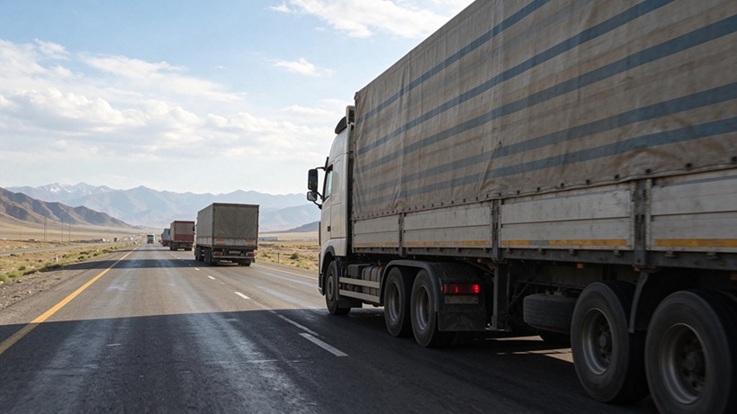
Railway freight is another important solution for China–Central Asia logistics.
Containerized railway transportation is often suitable for businesses moving larger volumes of cargo or arranging regular supply chains.
Its advantages include:
Relatively stable transportation arrangements on established corridors.
Suitable capacity for containerized and bulk shipments.
Competitive costs for certain large-volume shipments.
Connections to major logistics hubs across Central Asia.
However, importers should consider railway schedules, border gauge changes, terminal handling, and final-mile delivery when calculating the actual logistics cost.
Explore DR Trans railway transportation services to learn more about available freight arrangements.
The destination country should be one of the first factors considered when planning your shipment.
Here is a practical overview:
| Destination | Routes Worth Considering | Important Considerations |
|---|---|---|
| Kazakhstan | Khorgos or Alashankou–Dostyk | Destination city, road or rail availability |
| Uzbekistan | Via Kazakhstan or Kyrgyzstan | Tashkent and Fergana Valley have different route requirements |
| Kyrgyzstan | Via Torugart or Irkeshtam | Final destination and mountain road conditions |
| Tajikistan | Via Kyrgyzstan or Uzbekistan | Transit arrangements and onward road delivery |
| Turkmenistan | Via Kazakhstan or Uzbekistan | Transit permissions and border procedures |
These are general route references rather than fixed shipping instructions. The most suitable route should be confirmed according to the actual cargo origin, destination, and current border operating conditions.
For example, cargo going to Almaty may be arranged through Khorgos, while shipments to Andijan may benefit from evaluating the Kyrgyzstan corridor.
A route should always be selected based on the complete journey rather than the border crossing alone.
Even when two routes connect the same origin and destination, their actual transportation performance can differ.
Before confirming a shipment, importers should evaluate the following factors.
Do not compare freight quotations based only on the basic transportation rate.
Ask whether the quotation includes:
Export customs clearance.
Border handling and transloading fees.
Transit transportation costs.
Import customs clearance, where applicable.
Destination delivery charges.
A lower initial quotation does not necessarily mean a lower final logistics cost.
Always distinguish between estimated transportation time and actual door-to-door delivery time.
Border inspections, customs procedures, railway schedules, cargo consolidation, and terminal operations can all affect the final arrival date.
Ask your freight forwarder for an estimated delivery schedule that includes these stages.
The size and weight of your shipment can determine which transport mode is more economical.
For example:
Large shipments may benefit from full truckload or containerized railway services.
Smaller shipments may be more economical through less-than-truckload transportation.
Oversized cargo may require specialized vehicles and route assessments.
If you are comparing FTL and LTL options, read our guide on the main differences between FTL and LTL shipping.
Cross-border transportation involves more than moving cargo between two locations.
Importers should confirm:
Export documentation from China.
Commercial invoices and packing lists.
Customs declarations.
Transit documentation, where required.
Import permits and product-specific certificates, if applicable.
Requirements vary depending on the destination country and the type of goods. Confirming documentation before departure can help reduce avoidable border delays.
Reliable shipment visibility is essential, particularly for businesses managing regular imports.
Before choosing a freight forwarder, ask how cargo movements are monitored, how transportation updates are provided, and who is responsible for handling unexpected delays.
A well-organized logistics service should provide clear communication throughout the transportation process.
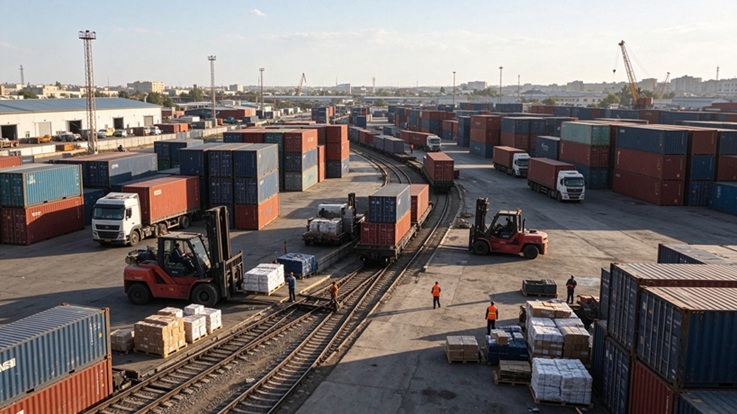
Selecting a transportation route is only one part of international logistics. Coordinating different transport stages, customs procedures, and final delivery arrangements is equally important.
An experienced freight forwarder can help importers:
Compare available road and railway corridors.
Select suitable transportation options based on cargo volume.
Coordinate border transportation and customs procedures.
Arrange full truckload and less-than-truckload services.
Organize multimodal transportation when necessary.
Monitor cargo movements and provide shipment updates.
At DR Trans, we provide international transportation solutions connecting China with Kazakhstan, Uzbekistan, Kyrgyzstan, Tajikistan, and Turkmenistan.
Our services include international TIR truck transportation, railway freight, road transportation, and multimodal logistics solutions. We help businesses evaluate different routes and organize transportation according to their cargo requirements and delivery destinations.
You can explore our China–Central Asia transportation services to learn more about our logistics capabilities.
There is no single best freight route for every shipment from China to Central Asia.
The Khorgos corridor may be suitable for shipments to Kazakhstan and onward destinations, while Alashankou–Dostyk provides an important railway connection. For certain destinations in Kyrgyzstan and Uzbekistan, southern road corridors may also be worth evaluating.
The best choice depends on your cargo volume, delivery deadline, budget, customs requirements, and final destination.
Instead of choosing a route based only on the lowest freight quotation, work with a logistics partner who can assess the entire transportation process.
Planning to ship cargo from China to Central Asia?
Contact DR Trans and let our team evaluate a suitable transportation solution for your shipment.
To receive a freight quotation, please provide:
Cargo origin: City or warehouse in China.
Destination: Country and delivery city.
Cargo details: Product description, weight, and dimensions.
Transport preference: Road, railway, or no preference.
Contact DR Trans for a China–Central Asia Freight Quote
Let DR Trans help you plan a more efficient and reliable freight route from China to Central Asia.
Khorgos and Alashankou are two important gateways connecting China with Kazakhstan and other Central Asian markets. The best route depends on the final destination and transport mode.
Road freight offers greater flexibility for direct delivery and different shipment sizes, while railway freight is often suitable for containerized and larger-volume shipments. The best option depends on cost, cargo volume, and delivery requirements.
Yes. Cargo can be transported to Uzbekistan through Kazakhstan or, for certain destinations, through Kyrgyzstan. The appropriate route depends on the delivery city and current border arrangements.
The main railway connections include Alashankou–Dostyk and Khorgos–Altynkol. These are important gateways for cross-border railway freight between the two countries.
Provide your cargo origin, destination, weight, dimensions, and preferred delivery time to a freight forwarder. With these details, the logistics provider can evaluate suitable routes and prepare a transportation quotation.

 IPv6 دعم الشبكة