


For Russian importers, the important question is not simply whether a Chinese supplier can provide this certificate. It is whether proof of origin is required for the particular goods, what form of proof is acceptable, and whether the information matches the actual shipment.
This matters when importing machinery, automotive components, household appliances, industrial materials and other commercial cargo from China.
Understanding origin documentation before dispatch can help importers avoid unnecessary document corrections and coordinate more effectively with their customs brokers and freight forwarders.
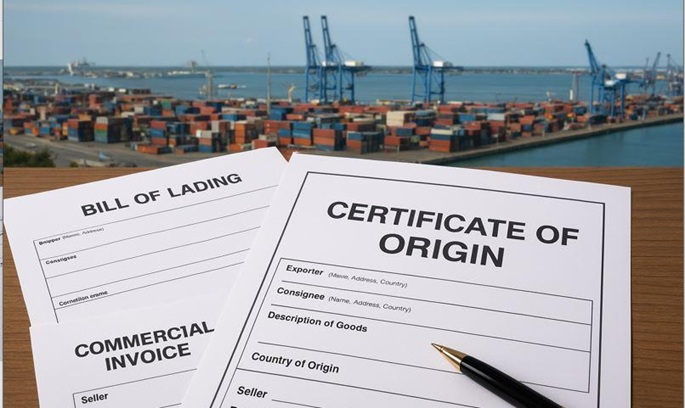
A Certificate of Origin is an official document issued by an authorised organisation to certify the country of origin of goods.
For example, if a Russian company purchases machinery manufactured in China, a Certificate of Origin may be used to confirm China as the country of origin.
However, the country of origin is not necessarily the same as the country from which the goods are shipped.
Imagine that a Russian importer purchases equipment manufactured in China. The cargo is temporarily stored in a warehouse in another country before being transported to Russia. Even if the truck departs from that intermediate country, the origin of the equipment does not automatically change.
Origin is determined by applicable rules concerning production and processing, rather than simply by the shipment's departure point.
Under the Eurasian Economic Union (EAEU) rules, goods may be considered to originate in a country if they are wholly obtained or produced there, or undergo sufficient processing according to the applicable origin criteria.
Proof of origin can play an important role in customs procedures, although it is not automatically required for every shipment entering Russia.
There are several reasons why Russian importers should pay attention to it.
Russian customs authorities may need to establish where imported goods were manufactured, particularly when customs measures or import restrictions depend on their country of origin.
For example, a Russian company importing electrical equipment from China should ensure that the declared origin is consistent with the manufacturer's information and supporting documents.
If customs authorities request proof of origin and the importer cannot provide adequate supporting information, additional verification may be necessary.
The country of origin can affect which customs measures apply to imported goods.
Depending on the product and applicable regulations, origin may be relevant to:
Import duty treatment and tariff measures.
Anti-dumping or countervailing duties.
Safeguard measures and other trade restrictions.
Additional customs verification requirements.
For this reason, Russian importers should not assess import costs using the HS code or TN VED code alone. The origin of the goods may also need to be considered.
It is important to understand that a Certificate of Origin does not automatically reduce customs duties. It provides supporting evidence of origin when the applicable customs rules require it.
Customs authorities may request additional information when they need to verify the declared origin of goods.
A Certificate of Origin can help support the declared information, but the document must be authentic and consistent with the goods being imported.
If the certificate contains incorrect details, or its information does not match the commercial documents, further checks may be required.
That is why it is better to review origin documentation before the cargo leaves China rather than wait until it reaches the Russian customs clearance stage.
No. This is one of the most important points for importers to understand.
Under Article 29 of the EAEU Customs Code, the origin of goods must be proved when the application of customs tariff measures, prohibitions and restrictions, or trade remedies depends on the origin of those goods, subject to the exceptions specified in the Code.
Articles 30 and 31 distinguish between two forms of origin documentation:
Declaration of Origin: A commercial or other document containing information about the origin of goods, declared by the manufacturer, seller or sender.
Certificate of Origin: A document in a prescribed form confirming the origin of goods and issued by an authorised state body or organisation.
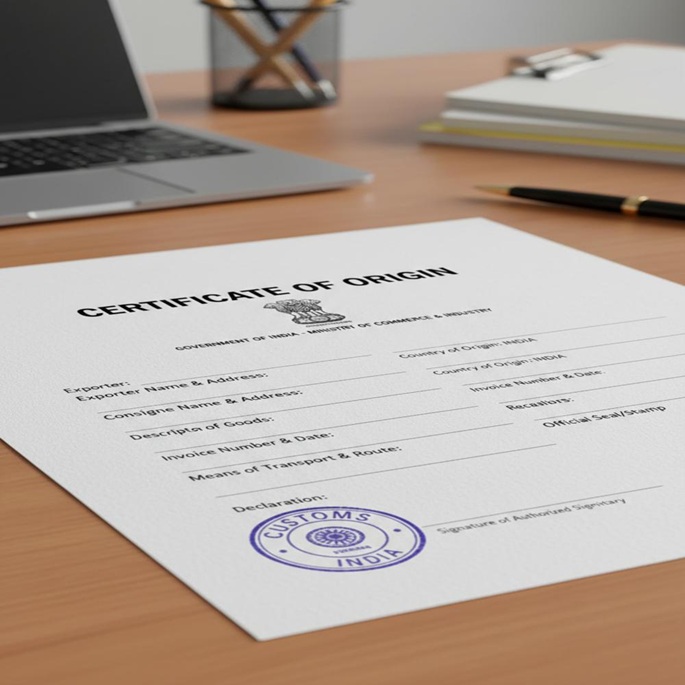
Under the EAEU's non-preferential rules of origin, a declaration of origin or, at the declarant's choice, a Certificate of Origin may generally be used to prove origin, subject to specific exceptions.
For example, different requirements may apply when trade remedies depend on origin or when customs authorities have reasonable grounds to question the declared information.
You can also consult the EAEU Non-preferential Rules of Origin for further details.
In practical terms, Russian importers should check:
The product's HS code or TN VED code.
The applicable rules of origin.
Whether anti-dumping duties or other trade measures apply.
Whether customs authorities require a particular form of origin evidence.
Whether the sales contract specifies a Certificate of Origin.
For example, ordinary industrial materials and goods subject to special trade measures may have different documentary requirements.
Before dispatch, the importer should ask its customs broker to confirm which form of origin documentation is appropriate for the specific goods.
It is much easier to clarify this before loading than to discover that additional documents are needed after the truck has departed.
Whether the exporter provides a Certificate of Origin or another acceptable form of origin evidence, the information should be accurate and consistent with the actual goods.
For shipments from China to Russia, the exporter and importer should pay attention to the following details:
1. Exporter and manufacturer information
Check company names and relevant details against the commercial documents and manufacturer information.
2. Country of origin
Make sure the declared origin reflects the actual origin under the applicable rules.
3. Product description
The product description should identify the goods clearly. This is particularly important when one shipment contains several different product categories.
4. Quantity and weight
Compare the quantities and weights with the packing list and other supporting documents. Any differences should be checked against the applicable documentation requirements.
5. Issuing authority and certificate details
Where a Certificate of Origin is used, check the issuing organisation, certificate number and relevant verification information.
6. Supporting commercial documents
Compare the origin information with the commercial invoice, packing list and available product information before dispatch.
One important distinction: a Certificate of Origin and a transport document serve different purposes. The former supports the origin of goods, while the latter records their transportation.
A Certificate of Origin is only one possible part of the documentation process.
Depending on the goods, customs procedure and delivery arrangement, a shipment from China to Russia may involve:
Commercial Invoice: Records the transaction details, product descriptions and declared value.
Packing List: Describes the packages, quantities, weight and dimensions.
Sales Contract: Records the agreement between the buyer and seller.
Proof of Origin: A Certificate of Origin or another acceptable origin document, where required.
Transport Document: Such as a CMR consignment note for international road freight.
Product-specific certificates or permits: Required for certain goods under applicable regulations.
For road shipments, the CMR consignment note records important transportation information, including the consignor, consignee, carrier and cargo details.
Importers arranging TIR transportation should also understand that TIR documents and origin documents are not interchangeable.
The TIR system concerns international customs transit, while a Certificate of Origin concerns the origin of the goods. One cannot replace the other.
Preparing the relevant documents together helps the exporter, importer, customs broker and transport provider work with consistent shipment information.
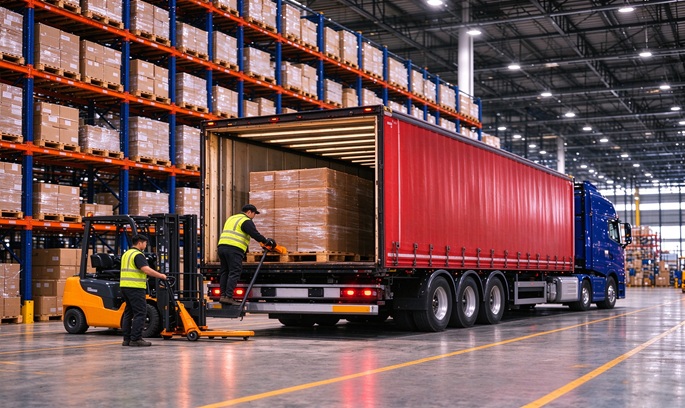
Document preparation is closely connected with logistics planning.
Before a truck is dispatched, the transport provider needs accurate cargo information, including the product description, quantity, packaging, weight, loading location and destination.
Consider a Russian importer purchasing machinery, electrical components or industrial materials from a Chinese supplier.
The supplier prepares the cargo and commercial documents. The Russian buyer coordinates import customs clearance with its customs broker. At the same time, the transport provider arranges vehicle capacity, loading and the international route.
If the product description or shipment quantity changes after the documents have been prepared, the relevant parties may need to review the paperwork before dispatch.
This is particularly important for full truckload (FTL) shipments, where vehicle capacity and loading arrangements are planned around the confirmed cargo details.
DR Trans has experience arranging international road transportation between China and Russia.
For example, in February 2025, DR Trans participated in a TIR transportation project moving cross-border e-commerce goods from Yiwu to Moscow through the Suifenhe border crossing. The shipment included jewellery and eyeglasses and was transported under the TIR system.
This publicly documented project illustrates how cargo information, customs arrangements and transportation planning need to be coordinated throughout an international shipment.
You can read more about this project in our article:
DR Trans provides international freight solutions connecting China with Russia and other destinations, including TIR truck transportation, conventional road freight, railway transportation and multimodal logistics.
Our TIR road freight service operates under the international TIR customs transit system, supported by our own fleet and logistics team.
Learn more about DR Trans international transportation solutions and discuss a suitable arrangement for your cargo.
To reduce unnecessary document corrections and potential delays, importers should complete several checks before dispatch.
Before transportation:
Confirm the product description, HS/TN VED code and country of origin with the supplier and customs broker.
Ask whether a Certificate of Origin is required or whether another form of origin declaration is acceptable.
Check that the origin information is consistent with the commercial invoice and packing list.
Confirm whether additional product certificates, licences or permits are required.
Provide the confirmed cargo information to the freight forwarder.
Agree on the transportation method, loading schedule and delivery arrangements.
These checks are particularly useful when a shipment contains different product categories or goods purchased from several manufacturers.
The earlier the information is confirmed, the easier it is to coordinate documentation, loading and transportation.
A Certificate of Origin may look like just another trade document, but it can play an important role in international trade between China and Russia.
For importers, the key is to understand when proof of origin is required, which form of documentation is acceptable, and whether the information is accurate before the goods are dispatched.
At DR Trans, we understand that international transportation involves more than moving cargo from one country to another. Proper coordination of cargo information, transport documents and delivery arrangements is also an important part of a well-organised shipment.
Planning to ship goods from China to Russia?
Contact DR Trans with your cargo description, weight, volume, loading location and destination. Our team can help you discuss suitable international transportation solutions for your shipment.

 IPv6 دعم الشبكة